The Coat Sleeve Gap That Gives Away an Off-the-Rack Fit Every Time
Quick Answer: Standard coat sleeve lengths are graded for average arm length, so a tall woman’s proportionally longer arms often leave wrists exposed even when the coat’s chest and body length fit correctly — checking a brand’s listed sleeve length, or budgeting for tailoring, is more reliable than judging fit by torso length alone.
The coat fit through the shoulders and body, which felt like the hard part was solved. Then you reached to grab a door handle and realized the sleeve stopped a few inches short of where it should.

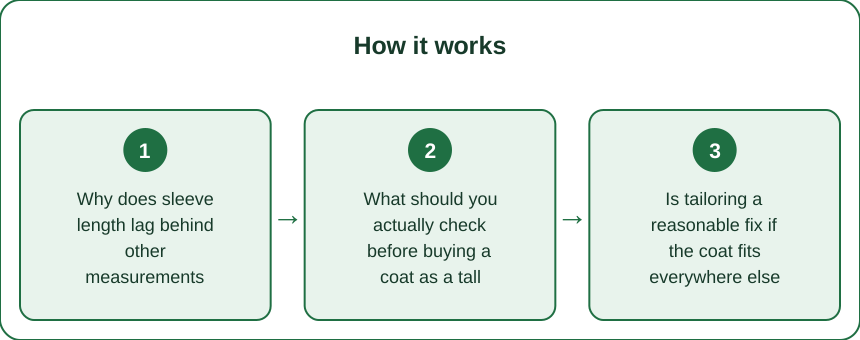
Why does sleeve length lag behind other measurements getting fixed for tall sizing?
Many brands that extend torso and body length for tall sizing don’t proportionally extend sleeve length by the same amount, since sleeve grading is often treated as a secondary adjustment rather than scaled with the same attention as body length. This means a coat labeled ‘tall’ can still leave a sleeve gap if the brand only adjusted torso length and not arm length specifically.
What should you actually check before buying a coat as a tall shopper?
Look for a listed sleeve length measurement in the product specs, measured from shoulder seam to cuff, not just a general ‘tall’ size label, and compare it against your own arm measurement taken the same way. Some brands specify this clearly for outerwear precisely because they know it’s a common gap point; others don’t list it at all, which is itself useful information about likely fit.

Is tailoring a reasonable fix if the coat fits everywhere else but the sleeves?
Extending a sleeve is possible but limited by how much extra fabric is folded under the existing cuff — a tailor can typically add an inch or two if there’s fabric allowance, but can’t create length that isn’t there. For coats that run more than an inch or two short, buying from a brand with genuinely longer sleeve grading is usually more reliable than relying on alteration.
5 Mistakes Tall Shoppers Make Buying Coats
- Judging fit only by torso length and skipping the sleeve measurement entirely.
- Assuming a ‘tall’ size label automatically means proportionally longer sleeves too.
- Not measuring their own arm length the same way a brand measures sleeve length.
- Expecting a tailor to add more sleeve length than the existing fabric allowance permits.
- Buying based on how a coat looks standing still rather than reaching or bending.
FAQ: Tall Coat Sleeve Fit, Answered
How much sleeve length can a tailor typically add?
Generally 1-2 inches depending on the fabric allowance folded under the cuff — beyond that, alteration isn’t usually possible.
Do raglan sleeve coats fit differently than set-in sleeves for this issue?
Sometimes yes, since raglan cuts distribute length differently through the shoulder, which can shift where the gap shows up.
Is it worth paying more for a brand with dedicated tall sleeve grading?
Often yes, if coat sleeve gaps have been a recurring problem, since it avoids the alteration cost and limitation entirely.
TL;DR:
- Coat sleeve length is often not scaled the same way as torso length in ‘tall’ sizing
- Checking a brand’s listed sleeve measurement against your own arm length is more reliable than the size label alone
- Tailoring can extend a sleeve slightly, but only within the fabric allowance already built in
- A short sleeve gap is one of the fastest visual tells of an off-the-rack fit for tall women
Before your next coat purchase, measure your own arm from shoulder seam to wrist and compare it directly to the brand’s listed sleeve spec, not just the general size label.
Keep Reading
This article is for general informational and styling purposes only. Fit, sizing, and product availability may vary — check current details before purchasing.