Why Tall Coat Shopping Should Happen in September, Not November
Quick Answer: Tall ranges are produced in small quantities, arrive with the first autumn delivery, and are rarely restocked. Because outerwear is the category where length matters most, tall sizes sell through faster than standard ones and are not replaced. Buying in September gives you the full range; buying in November gives you what nobody else wanted.
Every year the same thing. The first genuinely cold week arrives, you go looking for a coat, and every long option is available in every size except the ones that would work.
This is not bad timing on your part. It is how tall outerwear is bought, produced, and stocked, and the fix is simply to move your shopping forward by six weeks.

Why does tall stock disappear so early?
Small production runs, single deliveries, and the highest-stakes category.
Tall ranges are made in low volumes because the perceived market is small and the production cost of an extra pattern set is real. A brand might produce a tenth as many units of a tall coat as the standard version.
Those units usually arrive in a single delivery at the start of the season. Standard ranges get restocked through the autumn as sales data comes in; tall ranges frequently do not, because the reorder minimums do not make sense for the volume.
And outerwear is where length is least negotiable. A slightly short sleeve on a summer shirt is a minor annoyance. A coat sleeve that ends above the wrist bone in January is a coat you will not wear. So the tall customers who need it buy decisively and early, and the small run clears.
The result is a category where the stock curve and the demand curve are badly out of phase. Peak demand for coats is late October and November. Peak tall availability is early September.
There is a secondary effect worth knowing about. What remains in November tends to be the sizes and colours at the edges of the run - the very largest, the very smallest, and the colour the buyer took a chance on. That is why late shopping feels like a worse selection rather than just a smaller one.
What should you be checking on a tall coat?
Five measurements, in order of how hard they are to fix.
Shoulder seam position. Should sit at the edge of your shoulder. This is essentially unalterable on a tailored coat, so it is the first thing to check and the reason to walk away if it is wrong.
Sleeve length. Should cover the wrist bone with a little to spare, and remember you will wear layers underneath, which shortens the effective sleeve. Sleeves can be lengthened only if there is hem allowance inside, so check the cuff.
Body length. For a long coat, below the knee is where the proportion works on a tall frame, and standard-length coats often land at an awkward mid-thigh point. This is the measurement tall ranges exist to fix.
Room across the back with a layer on. Try coats over a jumper, not over a t-shirt. A coat that fits beautifully in September over a shirt can be unwearable in January over knitwear, and this is the most common autumn buying mistake in any height.
Rise of the armhole. A high armhole gives better movement and is a sign of decent construction. A low, wide armhole restricts arm movement once you are layered underneath, which shows up as that trapped feeling when you reach forward.
And one more thing that is not a measurement: check that you can sit down in it, drive in it, and put a bag over your shoulder in it. A coat is worn in motion and most fitting-room assessments are done standing still.
What Nobody Tells You About Buying Tall Outerwear
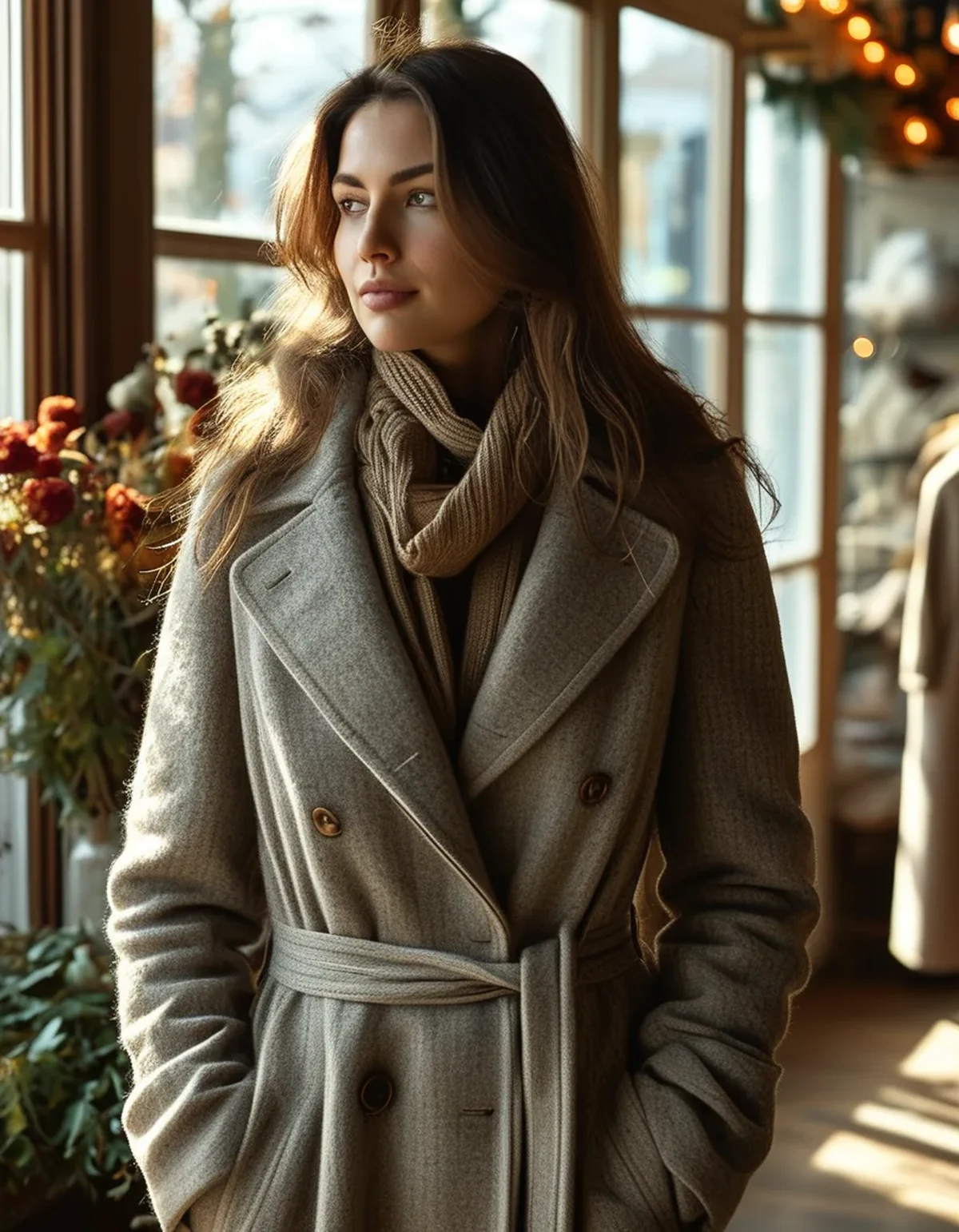
Men’s coats are a legitimate option and are consistently ignored. They are cut longer in the body and sleeve, they are available in far more sizes, and a men’s coat with the waist taken in by a tailor solves the length problem completely for a fraction of the frustration. Overcoats and trenches work best; anything with a defined waist works least.
A tailor can shorten but almost never lengthen. So the rule for tall shopping is to buy long and cut down. A coat that is slightly too long is a solvable problem; a coat that is slightly too short is a permanent one.
Vintage and secondhand skew long. Coats from the 1970s and 1980s were cut longer and with more generous sleeves as a matter of course. For tall shoppers, secondhand is not just a budget option, it is a genuinely better hunting ground for length.
Sleeve length is where cheap coats fail first. Many affordable coats have no hem allowance in the sleeve at all, which means no adjustment is possible in either direction. Checking inside the cuff before buying takes five seconds and rules out a lot.
And one great coat outperforms three adequate ones. Outerwear is worn over everything, every day, for five months. It is the single highest cost-per-wear item in an autumn wardrobe, and it is where the tall premium is most worth paying.
How should you actually plan the season?
Front-load it, and treat September as the buying window rather than the transition month.
Shop the first three weeks of September for outerwear. Full size runs, full colour ranges, and the stock has not been picked over. This applies to boots as well, where tall shafts and wider calf options clear on a similar timeline.
Know your five numbers before you go. Shoulder to shoulder, sleeve length from shoulder point to wrist, back length from nape to desired hem, bust over a jumper, and hip. With these you can assess a coat online in thirty seconds instead of ordering three.
Try over the layers you will actually wear. Take a jumper with you or wear one. This one habit prevents most autumn outerwear regret.
Buy the tall version even if the standard fits acceptably. Acceptable in September is short in January once you are layered.
Have alterations done immediately. A coat bought in September and altered in September is ready for the first cold week. A coat altered in November spends the first cold fortnight at the tailor.
And treat it as a multi-year purchase. Since the good options appear once and disappear, a coat you love is worth buying at full price in September rather than hoping for a sale on something you settled for. The tall shopper who waits for markdowns in this category consistently ends up with less.
FAQ: Tall Coat Shopping Questions, Answered
Is it worth waiting for the autumn sales?
Rarely, for tall outerwear specifically. By the time discounts arrive the size run is broken, and the coats remaining in tall sizes are the ones that did not sell for a reason. Sales are excellent for accessories and standard-size items and poor for this category.
What length actually suits a tall frame?
The reliable options are just below the knee or full length for a formal coat, and mid-thigh for a casual one - the length to avoid is the one that lands at the widest part of the calf, which is where standard-length coats often fall on a tall wearer. Trying is better than any rule, and having the numbers means you can try efficiently.
How much should I budget for alterations?
Hemming a coat and shortening sleeves with a hem allowance typically costs a modest fraction of the coat price. Moving buttons or taking in a waist is similar. Anything involving the shoulder is expensive and usually not worth doing, which is why the shoulder is the measurement to buy for.
TL;DR:
- Tall outerwear is produced in small runs, delivered once, and rarely restocked, so it clears long before the weather demands it.
- Peak tall availability is early September and peak demand is November, which is why late shopping feels so bleak.
- Buy for the shoulder and the length, check hem allowance in the sleeve, and try coats over the knitwear you will actually wear.
- Men’s coats and vintage both skew longer and are consistently overlooked by tall shoppers.
The coat you want exists right now, in your size, on a rail. In eight weeks it will not, and no amount of looking harder will change that.
Keep Reading
This article is for general informational and styling purposes only. Fit, sizing, and product availability may vary — check current details before purchasing.