The Layering Problem: When Every Hem Ends in the Same Two Inches
Quick Answer: Layering looks intentional when hems are clearly staggered — each layer visibly longer or shorter than the one before, by a few inches at minimum. On a long torso, standard-length pieces all end within a couple of inches of each other, producing a stack of near-identical hems. The fix is to build deliberate length differences: one genuinely long base, one mid-length, one clearly longer outer.
Three good pieces. Together they look like a pile.
The problem is not the pieces and it is not your styling instinct. Standard tops, standard knits, and standard jackets are all cut to end around the same point on a standard torso — and on a longer one, they all end around the same point too, just higher. The third section covers the single measurement that makes layering work.
Why does layering fail specifically on a long torso?
Because layering is a game of visible differences, and standard grading collapses those differences.
On a standard torso, a t-shirt might end at the hip, a sweater slightly below it, and a jacket slightly below that. The differences are small but visible, and the eye reads a deliberate stack.
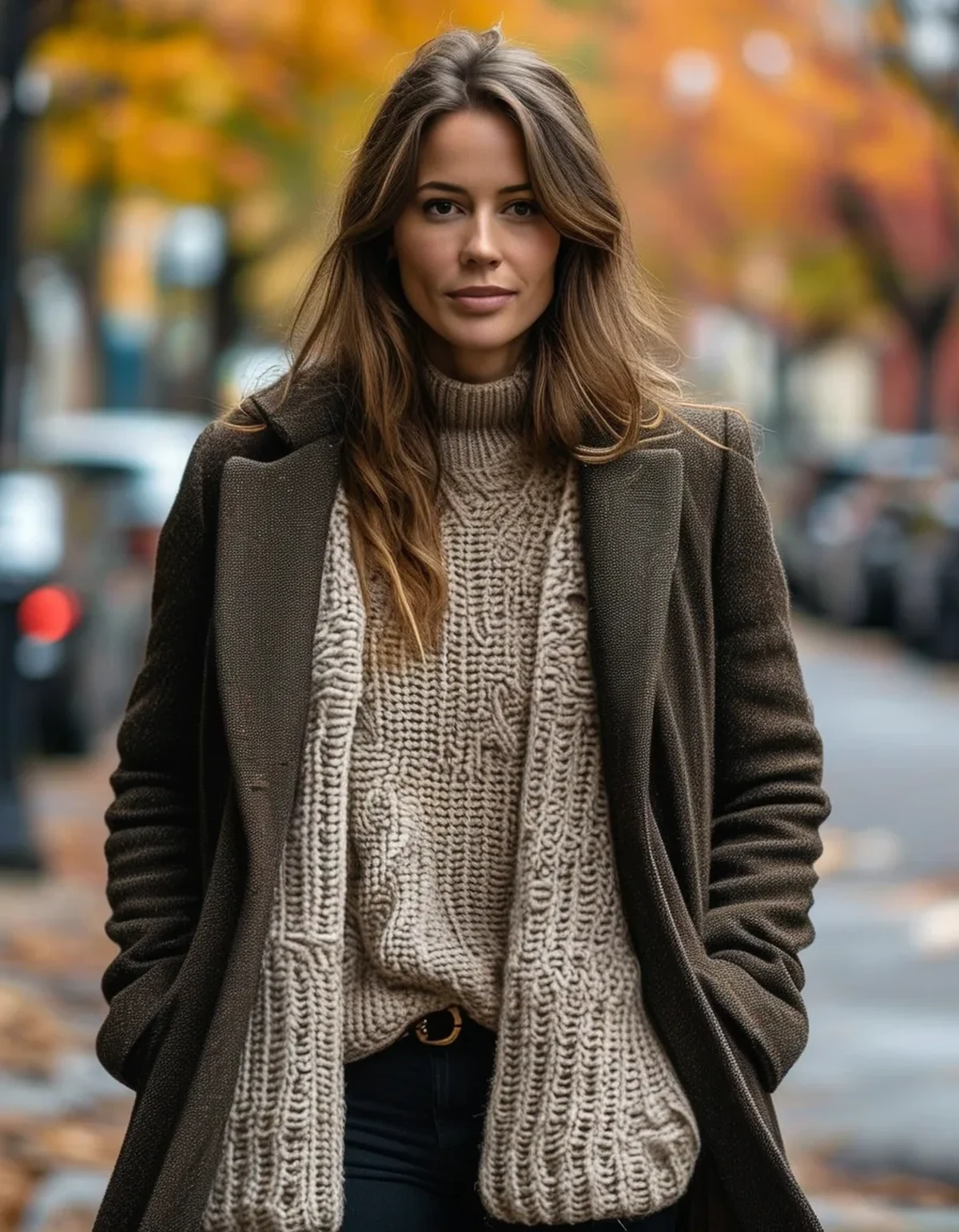
On a longer torso, every one of those pieces rides up by a similar amount. The absolute differences between them stay the same — a couple of inches — but now they are all sitting at your natural waist instead of your hip, in a zone where your body is narrowing rather than widening. Three hems within two inches of each other, all at your waist, reads as bulk rather than as layers.
Two secondary problems make it worse:
The base layer stops being a base layer. If your tee ends at your waist, it is not extending past anything. The whole point of a base layer in a layered look is that it shows below the layer above it.
The jacket becomes the shortest visual element. Outerwear grades least of all, so on a long torso your jacket can end higher than your sweater, which inverts the expected order and reads as an accident.
The diagnosis is simple and it explains the frustration: you have three mid-layers and no base or outer. Not because you bought the wrong pieces, but because grading turned all three into the same length.
What does correctly staggered layering look like?
Build the outfit around deliberate length differences and it works immediately.
Base layer: genuinely long. Long-line tees, tunic tanks, and shirts with a curved hem. This layer should extend clearly below the next one — three inches minimum, and more is fine. Extra-long tees are widely available and cheap, and this is the single highest-value item in a tall layering wardrobe.
Mid layer: your normal length. A sweater, a knit, a shirt. This is the piece you probably already own that ends at your waist. That is fine, once there is something visibly longer under it.
Outer layer: clearly longer than both. A long cardigan, a duster, a longline coat. This creates the vertical line that pulls the whole look together and gives the eye somewhere to travel.
The pattern is long, medium, longest. It works on any frame and it is essential on a long one.
A useful measurement: aim for at least a three-inch difference between adjacent visible hems. Less than that reads as an error rather than a choice. This is the number to check when you are putting something together and it looks off without your being able to say why.
Where the differences do not need to be visible: thermal base layers worn purely for warmth under everything can be any length. This is about the layers that show.
What Nobody Tells You: the open outer layer does most of the work
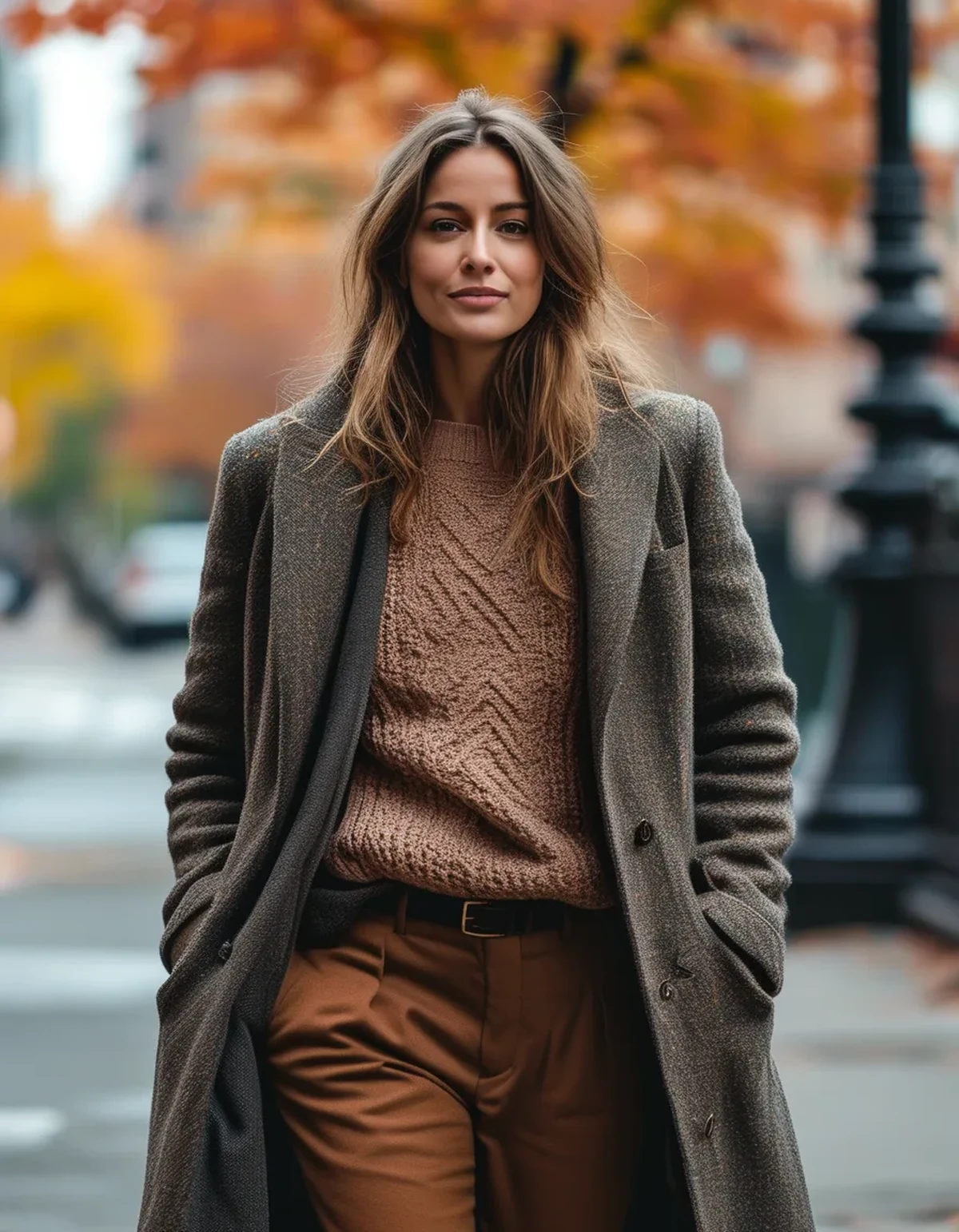
If you take one thing from this: an open long layer is the most powerful item in a tall wardrobe, and it fixes layering problems it has no obvious relationship to.
Here is the mechanism. An open coat, cardigan, or duster creates two long unbroken vertical lines running down either side of your torso. The eye follows those lines from shoulder to hem without interruption. Everything happening in between — the stacked hems, the mismatched lengths, the awkward waistband — sits inside that frame and stops being the thing you notice.
This is why a look that seems cluttered suddenly resolves the moment you add a long open layer over it. You did not fix the hems. You gave the eye a stronger line to follow.
Three practical implications:
A long open layer is worth more than a short structured one in a tall wardrobe, and it is worth buying even if the coat underneath your budget is nicer.
Length beats warmth for this specific purpose. An unlined long duster in a lightweight knit does the visual work of a heavy coat and layers better in autumn’s temperature swings.
Keep it open. Buttoned, it becomes another horizontal-heavy garment. Open, it is two vertical lines. Many long coats look entirely different depending on this one choice.
The related tip most people never try: a long open layer also solves the too-short sweater problem, the awkward jacket problem, and the exposed lower back problem simultaneously. It is the single most efficient purchase available to a tall wardrobe, which is why it is worth the money that a slightly-too-short jacket is not.
How do you build an autumn layering rotation?
A small set of pieces that recombine, chosen for length rather than for variety.
Two or three extra-long base tees in neutral colors. Long enough to show three inches below a sweater. These are inexpensive and they are the foundation.
One long open cardigan or duster in a color that goes with most of your closet. This is your workhorse.
One longline coat for when it gets genuinely cold — long enough to clear a backpack or bag strap and to read as outerwear rather than as a jacket.
Sweaters you already own become the mid layer, and stop having to solve the length problem alone.
A scarf, which is doing more than warmth. A long scarf hanging vertically reinforces the same vertical line the open coat creates, and it draws attention up toward your face and away from the hem zone.
On proportion: with all this vertical length, keep the bottom half clean. A straight or wide leg in a single color continues the line. Cropped or contrast-heavy bottoms cut it.
On the waist: if the stacked-layers look starts to read as shapeless, define the waist with a belt over the mid layer, worn under the open outer. This gives you shape without adding another hem.
A note on seasons: this is exactly the wardrobe that carries you through the transition weeks when the morning is genuinely cold and the afternoon is not. Layers that look deliberate are also layers you can remove one at a time without the outfit falling apart — which is the practical reason this way of dressing exists.
FAQ: Tall Layering Questions, Answered
Should the longest layer always be on the outside?
Usually, yes — it creates the cleanest frame. The main exception is a deliberately cropped jacket over a long dress or skirt, which works because the difference is dramatic rather than marginal. The rule is really about avoiding near-matches, not about strict order.
Do I need tall-specific sizes for base layers?
For base layers, yes if you can — they are the layer that most needs the length. But standard extra-long or tunic-length tees often work just as well and cost less, since they are cut long by design rather than by grading.
Does this work with a shorter jacket I already love?
Yes, if you commit to the difference. A genuinely cropped jacket over a long base and a long bottom looks intentional. The problem is only ever the jacket that is a little bit short, which reads as a fit failure rather than a choice.
TL;DR:
- Layering reads as intentional when hems are clearly staggered by at least three inches.
- On a long torso, standard pieces all end in the same narrow band, so nothing stacks.
- Build long, medium, longest — with a genuinely long base tee as the foundation.
- An open long outer layer creates two vertical lines and fixes problems it does not touch directly.
- Keep the bottom half clean and use a belt, not another hem, to define the waist.
Autumn is the season that rewards this the most, because layering is not optional when the day swings twenty degrees between morning and afternoon. The pieces you need are not expensive or hard to find — a couple of long tees and one long open layer will carry an entire wardrobe you already own. Buy for the length difference rather than for the piece itself, and the outfits you have been almost getting right will start landing on the first try.
Keep Reading
This article is for general informational and styling purposes only. Fit, sizing, and product availability may vary — check current details before purchasing.