Why Standard Scarves Look Wrong on a Longer Frame
Quick Answer: A standard scarf runs around 170 to 180 centimetres, which is sized to wrap comfortably around an average frame with tails long enough to drape. On a longer neck and torso, the same scarf produces short tails that stop at the chest, which visually cuts the upper body in half and shortens the whole line. Look for 200 centimetres and above, and prioritise drape over bulk — a long scarf in a fine fabric works far better than a short one in a thick knit.
Scarf length is the accessory equivalent of inseam, and almost nobody thinks about it that way.
We have covered layering and outerwear for longer frames, the proportion rise guide, and why a two-inch inseam difference changes an entire outfit. This is the same principle applied above the waist.
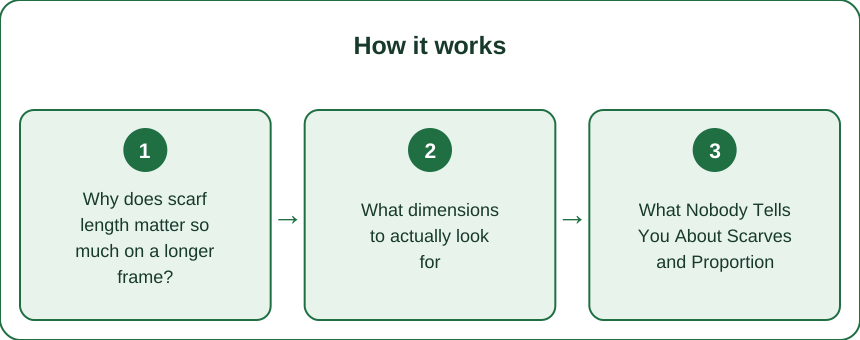
Why does scarf length matter so much on a longer frame?
Because a scarf is a vertical line, and vertical lines are read proportionally.
Short tails create a horizontal break high on the torso. The eye stops where the scarf stops, and a break at mid-chest on a long torso reads as a shortened upper body.
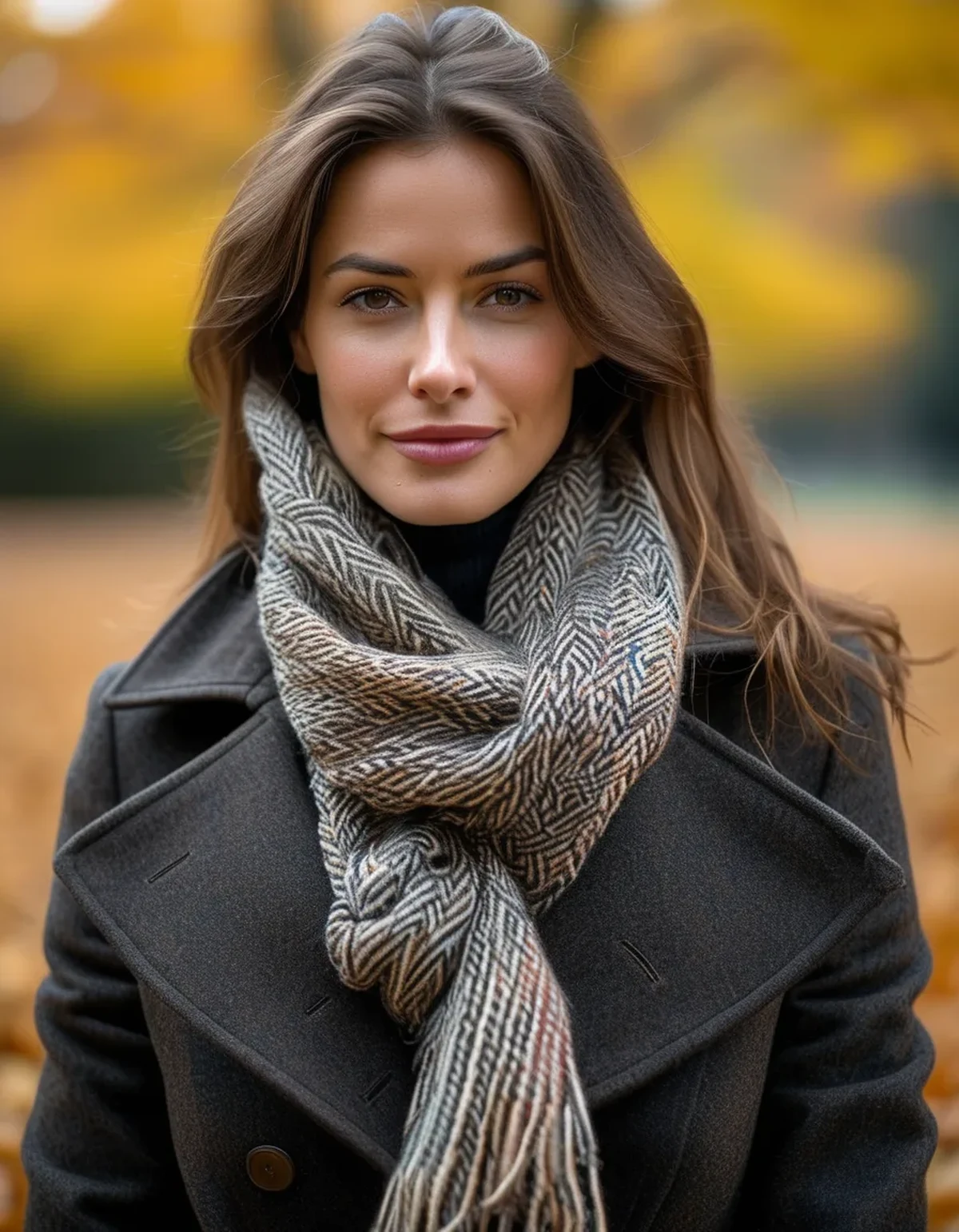
Long tails extend the vertical. A scarf that drapes to the waist or below continues the line downward rather than interrupting it, which is why the same scarf looks completely different on different frames.
Wrapping consumes length faster on a longer neck. A double wrap that leaves generous tails on one person leaves stubs on another, and the difference is often only ten centimetres of scarf.
Bulk without length reads as heavy. A thick knit that is too short gathers volume at the neck with nothing balancing it below, which visually shortens the neck rather than framing it.
And coat length interacts with it. A scarf that stops well above a long coat hem leaves an awkward gap; one that reaches past the coat opening ties the two together.
Width matters almost as much as length. A wide scarf can be folded to control bulk, but you cannot make a narrow scarf wider, so err towards generous on both dimensions.
What dimensions to actually look for
Six numbers and materials that make the difference.
200 centimetres and up for a wrapped scarf. This is the single most useful number, and it is usually listed in the product details rather than the title.
Blanket scarves at 130 by 130 centimetres or larger work particularly well, because the diagonal fold produces genuinely long tails.
Width of at least 60 centimetres for anything you want to wear open over a coat, so it reads as a deliberate layer rather than a strip.
Fine gauge over chunky knit, most of the time. A long fine scarf drapes and creates line; a long chunky one creates volume, which is harder to balance.
Fringing adds visual length for free and is one of the easiest ways to extend a scarf that is slightly short.
And weight matters for drape. A scarf with some weight to it hangs straight down; a very light one flares outward and loses the vertical line entirely.
One practical note on shopping: most brands list scarf dimensions but bury them, and many high street scarves are closer to 160 centimetres than the 180 they appear. If the dimensions are not listed at all, assume they are on the short side.
What Nobody Tells You About Scarves and Proportion
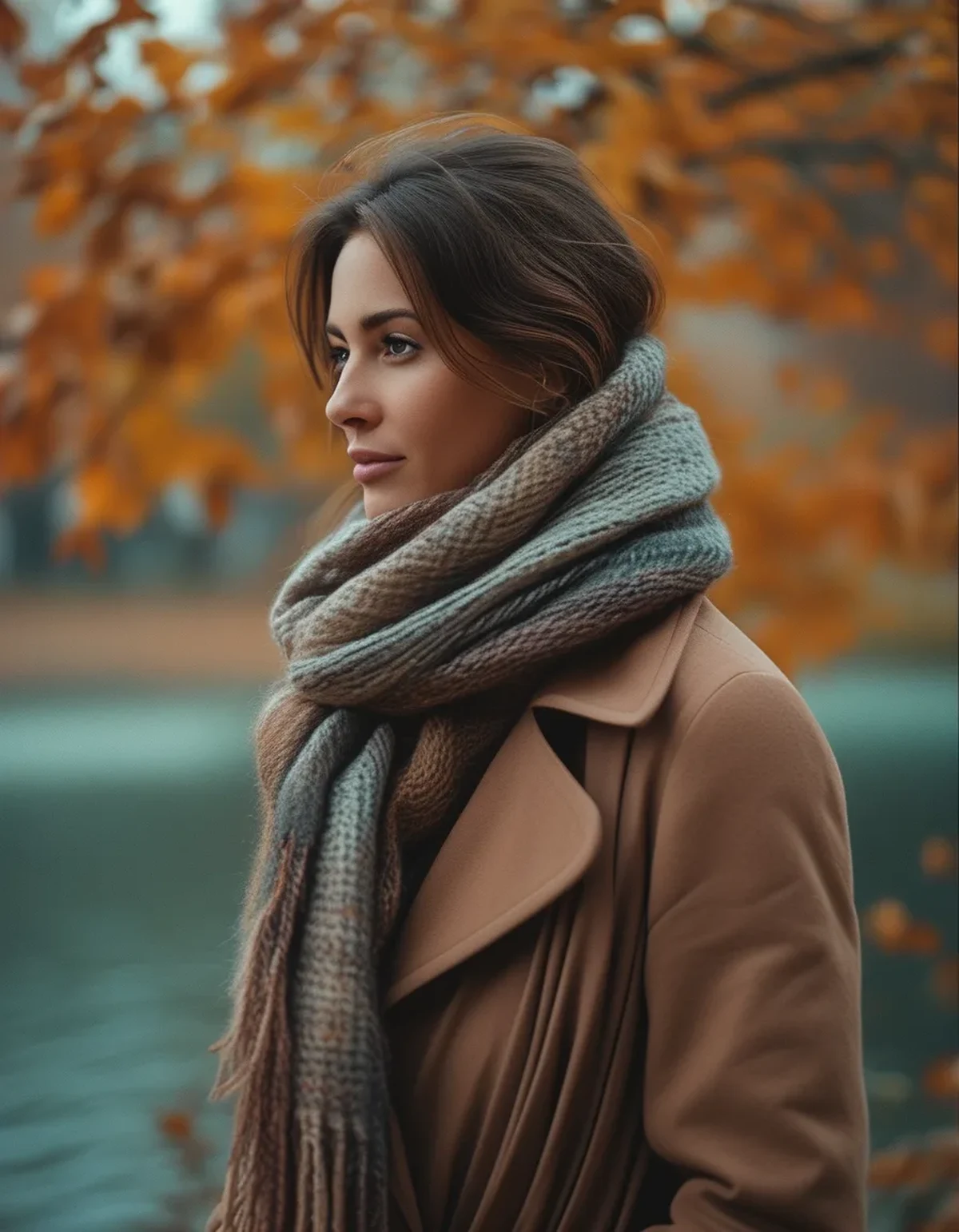
The loop-and-pull knot eats the most length. It looks tidy and it is the least forgiving on a longer frame. An open drape or a single loose wrap preserves far more of the line.
Asymmetry helps. One tail longer than the other creates a diagonal, which reads as deliberate and adds visual length in a way a symmetrical arrangement does not.
A scarf can rescue a coat that is slightly short. Extending the vertical past the coat hem visually lengthens the coat, which is the cheapest fix available for an outerwear proportion problem.
Colour contrast shortens. A scarf in strong contrast to your coat creates a hard break; a tonal scarf continues the column and is the safer choice when proportion is the issue.
Men’s scarves are frequently longer for the same price and style, and worth checking if the women’s version tops out too short.
And the mirror check should be full-length and from a distance. Scarf proportion is a whole-body question, and a bathroom mirror at close range will tell you nothing useful about it.
Five ways to wear a long scarf well
The open drape. Simply around the neck with both ends hanging front. The most flattering option on a long frame and the one that most people skip because it feels too simple.
The single loose wrap with uneven tails. One wrap, one tail noticeably longer. Creates the diagonal that reads as intentional.
The blanket scarf folded diagonally, worn open over a coat. Adds width at the shoulder and length at the front simultaneously, which balances a long torso well.
Under the coat, tails long. Tucking a scarf inside a coat with the ends visible below the lapel creates a strong unbroken vertical and is the most polished option for anything smart.
Belted over a coat. A long scarf worn open with a belt over the top holds it in place, defines the waist and turns the whole thing into a deliberate outfit rather than an accessory.
And what to avoid: the tight double-wrap with short tails, which is the arrangement that creates the high horizontal break and does the most damage to the proportion you are trying to protect.
FAQ: Scarf Proportion Questions, Answered
How long should a scarf be for a tall woman?
At least 200 centimetres for anything you intend to wrap, and ideally more. Standard scarves at 170 to 180 centimetres leave tails that stop at mid-chest, which creates a horizontal break high on a long torso.
Are blanket scarves good for tall frames?
Yes, particularly at 130 by 130 centimetres or larger. Folded on the diagonal they produce genuinely long tails and add width at the shoulder, which balances a long torso better than a narrow scarf does.
Should I choose a chunky knit or a fine one?
Fine, most of the time. A long scarf in a lighter gauge drapes and creates a vertical line. A chunky knit adds bulk at the neck, which shortens the neck visually unless the length is generous enough to balance it.
TL;DR:
- Standard scarves at 170 to 180 centimetres leave short tails that cut a long torso horizontally.
- Look for 200 centimetres or more, or a blanket scarf at 130 by 130 and above.
- Fine gauge and some weight drape into a vertical line; chunky knit adds bulk without length.
- Open drapes and uneven tails preserve the line. Tight double wraps destroy it.
Scarf length is the inseam problem moved up the body, and the fix is the same: shop by the measurement, not by the label.
Keep Reading
This article is for general informational and styling purposes only. Fit, sizing, and product availability may vary — check current details before purchasing.