Why Standard Shoe Sizing Feels Off for Many Tall Women (and What Actually Helps)
Quick Answer: Taller women often have proportionally longer, narrower feet than standard shoe lasts (the foot-shaped mold shoes are built around) account for, since most mainstream sizing assumes a fairly fixed width-to-length ratio that doesn’t scale linearly with height. Sizing up in length to fit toe room, then addressing width separately with brands offering narrow options or different lasts, generally works better than accepting a compromise fit in one size.
Shoe fit gets far less attention in the ‘tall women’ conversation than pants length, but it’s a real and common frustration rooted in an actual sizing mismatch, not just picky preference.

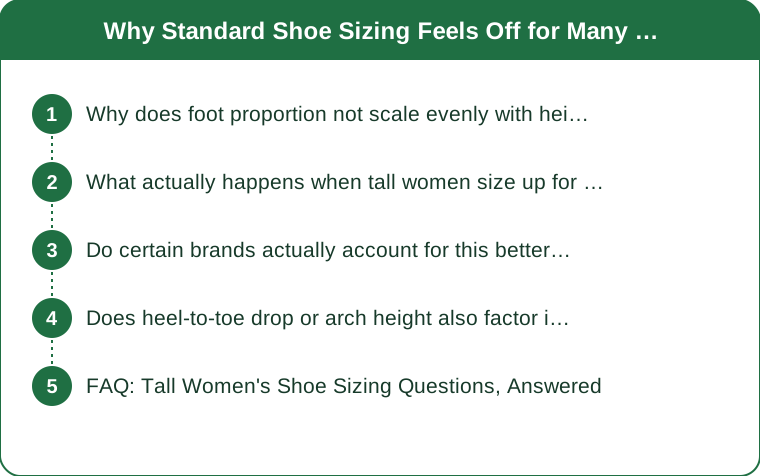
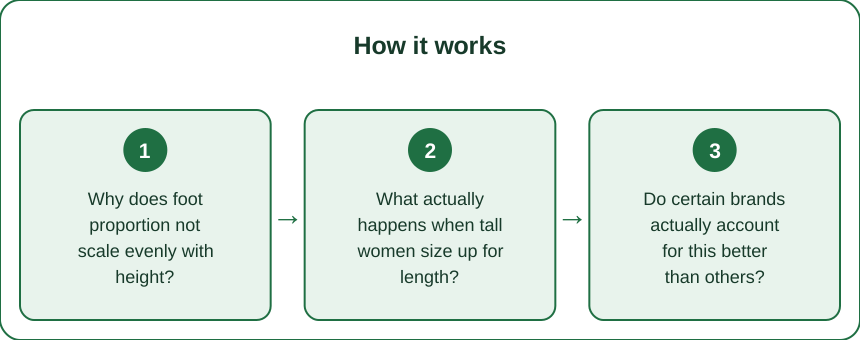
Why does foot proportion not scale evenly with height?
Standard shoe lasts are built assuming a relatively fixed relationship between foot length and width across sizes, but real foot proportions vary more than that fixed ratio accounts for — and taller individuals, whose feet tend to be proportionally longer relative to typical width scaling, often end up between the assumptions baked into standard sizing.
This means a shoe sized correctly for length can run comparatively too wide, or a shoe that fits width well can run short — a genuine last-shape mismatch, not simply ‘hard to fit feet’ in a vague sense.
What actually happens when tall women size up for length?
Sizing up to accommodate longer feet often means the shoe’s width and the position of its widest point (usually placed to match average proportions for that size) no longer line up correctly with the actual foot, resulting in a shoe that has enough front-to-back room but slides or feels loose at the midfoot and heel — the classic ‘right length, wrong fit everywhere else’ problem.
This is why simply buying a bigger size across the board is a common but often unsatisfying fix — it solves one dimension of the mismatch while sometimes worsening another.

Do certain brands actually account for this better than others?
Yes — some brands offer narrow width options specifically, or use lasts built around a longer, narrower foot shape that better match this proportion pattern, rather than only offering standard or wide width variants. Checking whether a brand offers narrow (not just standard) width options is a more useful filter than brand reputation alone when this is a recurring fit issue.
Athletic shoe brands in particular vary widely in last shape between models even within the same brand, so a specific model working well doesn’t guarantee another model from the same company will fit the same way — checking model-specific width options matters more than brand loyalty here.
Does heel-to-toe drop or arch height also factor into this?
It can, secondarily — taller individuals sometimes have a correspondingly longer arch structure, and a shoe’s arch support placement (built around average foot length assumptions) may not align as precisely for a longer foot, which can show up as vague midfoot discomfort that isn’t obviously a length or width issue at first.
This is a less universal factor than the length-width mismatch, but worth considering if a shoe fits correctly in length and width yet still feels subtly wrong across the arch — an insole with adjustable or better-positioned arch support can sometimes resolve this without needing a different shoe entirely.
FAQ: Tall Women’s Shoe Sizing Questions, Answered
Should I always size up if I’m tall, even if my foot length measures true to a size?
Not automatically — measure your actual foot length and compare to the brand’s specific size chart rather than assuming height alone dictates sizing up; the mismatch is about proportion, not simply about being tall.
Do custom or made-to-order shoes solve this problem more reliably?
Yes, generally, since they’re built to your actual foot measurements rather than a standard last — though at a higher cost and longer wait time than off-the-shelf options, which makes it more practical for frequently worn shoe types than an entire wardrobe.
Does this proportion issue affect boots and heels more than sneakers?
Often yes — structured shoes with less give (leather boots, heels) show a fit mismatch more noticeably than flexible athletic shoes, which can accommodate minor proportion differences more forgivingly through their more adaptable materials.
TL;DR:
- Foot width doesn’t scale linearly with length across standard sizing — a real proportion mismatch
- Sizing up for length alone can leave width or heel fit worse, not better
- Check for brands offering narrow-specific widths, not just standard sizing charts
- Arch length can be a secondary, less obvious contributor worth checking if fit still feels off
This is a genuine last-shape issue, not just a preference — targeting the actual mismatch (width options, not just size) solves it more reliably than buying bigger across the board.
Keep Reading
This article is for general informational and styling purposes only. Fit, sizing, and product availability may vary — check current details before purchasing.