The Underwear Rise Problem Almost Nobody Talks About for Tall Women
Quick Answer: Underwear rise (the distance from waistband to crotch seam) is scaled to an average torso length, so tall women with a longer torso often get a rise that sits lower than intended, causing waistband slipping and an odd fit under fitted bottoms.
It’s the fit issue nobody talks about because it’s invisible — but you feel it every time a waistband slips below where it should sit, or the front rise feels like it’s fighting your body instead of following it.

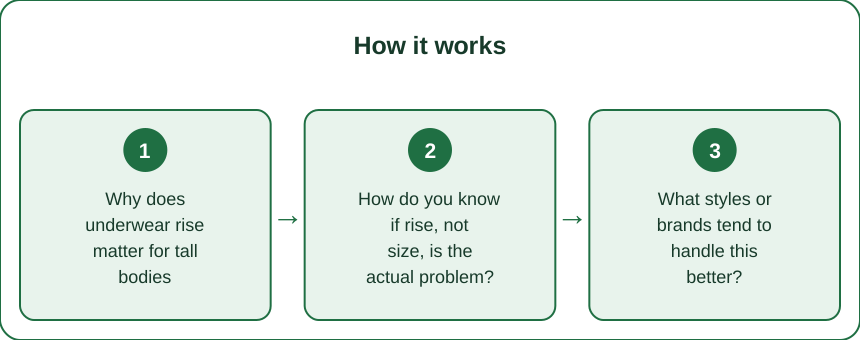
Why does underwear rise matter for tall bodies specifically?
Rise is measured as the distance from the waistband to the crotch seam, and it’s typically graded based on an average torso length within a given size range — not adjusted separately for height. A tall woman with a proportionally longer torso ends up with a rise that’s technically the correct waist and hip measurement, but sits lower on her body than the design intended.
This matters more than it sounds like it should, because a rise that sits wrong affects everything layered on top of it — waistbands slip below the hip bone, fabric bunches oddly under fitted leggings or trousers, and the whole garment can feel like it’s migrating throughout the day.
How do you know if rise, not size, is the actual problem?
If the waist and hip measurements match your size chart correctly but the underwear still feels like it’s sliding down or sitting oddly low, that’s usually a rise mismatch rather than a sizing mismatch — sizing up won’t fix it and often makes the waistband looser without correcting the position.
A simple check: put on a pair and notice where the waistband naturally settles after a few minutes of normal movement. If it consistently ends up an inch or more below your natural waistline despite starting higher, the rise is likely too short for your torso length.
What styles or brands tend to handle this better?
High-rise styles generally have more built-in margin for a longer torso than mid-rise or low-rise cuts, simply because there’s more fabric to work with before it runs out of room to sit properly. Brands that specifically size using a height range (not just S/M/L) alongside standard sizing are more likely to have accounted for this proportionally.
Seamless and stretch-knit fabrics also tend to be more forgiving than rigid cotton-blend styles, since the extra give allows the garment to sit closer to its intended position even when the base pattern wasn’t cut with a longer torso in mind.

What Nobody Tells You About Underwear Fit for Tall Women
Most sizing guides talk extensively about hip and waist measurements but almost never mention rise as a separate variable worth checking, even though it’s the dimension most directly affected by torso length. It’s treated as a fixed constant across a brand’s whole size range, when in practice it’s one of the most inconsistent measurements between brands.
It’s also rarely mentioned that the same size in the same brand can have different rises across different style lines — a brand’s high-rise brief and their mid-rise bikini cut aren’t just different heights, they’re built on different base patterns, so what works in one style may not translate to another from the same label.
Does this affect how leggings and fitted bottoms fit too?
Yes — a too-low rise underneath creates a visible line or bunching under leggings and fitted trousers, which often gets misattributed to the leggings themselves rather than the underwear layer underneath causing the issue. Switching to a properly proportioned high-rise style frequently smooths out a fit problem that seemed to be about the outer garment entirely.
This is a small but common troubleshooting step worth trying before assuming a legging or trouser doesn’t work for your body — sometimes the outer layer is fine and the layer underneath is the actual source of the issue.
FAQ: Tall Women’s Underwear Fit Questions, Answered
Should tall women always size up in underwear?
Not necessarily — sizing up addresses width, not rise, so it can leave the waistband looser without fixing the position problem if rise is the actual issue.
Are there brands that specifically design for tall torsos?
A small number of intimates brands market extended or tall-specific rise options, though it’s a much less developed category than tall outerwear or activewear sizing.
Does this issue get worse with certain fabrics?
Rigid, non-stretch fabrics tend to hold a fixed rise position more rigidly, making a mismatch more noticeable than in a stretch-knit style that has some give to compensate.
TL;DR:
- Underwear rise is scaled to average torso length and often sits lower than intended on a taller frame
- If waist and hip measurements fit but the garment still slides down, rise — not size — is the issue
- High-rise styles and stretch fabrics tend to accommodate longer torsos better
- A too-low rise can cause visible lines under leggings that get mistaken for a legging fit problem
Rise is the fit variable almost nobody talks about, but for a tall torso it’s often the actual reason underwear feels like it’s fighting your body instead of fitting it.
See It in Motion
Seen here: High Waist Yoga Leggings with Side Pockets — shop it on bubblelime.com
Keep Reading
This article is for general informational and styling purposes only. Fit, sizing, and product availability may vary — check current details before purchasing.