Why Tall Women's Leggings Problems Are Usually a Rise Issue, Not a Length Issue
You finally found leggings in a tall size. The hem hits your ankle perfectly. And the waistband still gaps at the small of your back, and the crotch seam still sits an inch lower than it should. You solved the wrong problem — and so did the brand.
Quick Answer: Most tall-specific legging complaints — waistband gapping, a low-sitting crotch seam, a waistband that slides down — are rise problems, not length problems. “Tall” sizing almost always extends the inseam only, leaving the rise unchanged. Measure your rise from crotch seam to natural waist on a pair that fits (most tall frames need 11–13 inches for a high-rise), then compare that number to a brand’s listed rise before you buy.

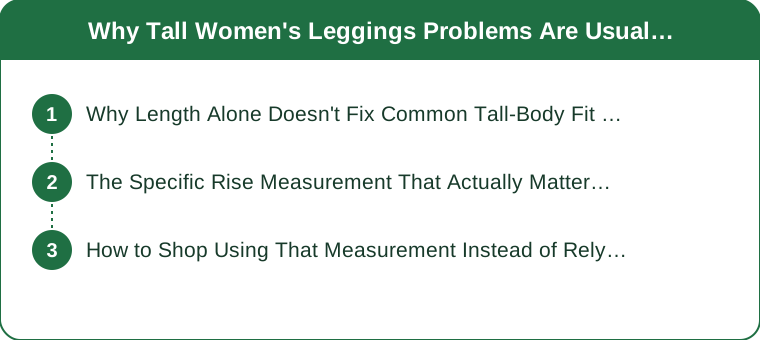
What’s the Difference Between Rise and Inseam?
They measure two completely different distances, and confusing them is why so much tall shopping goes wrong.
- Inseam runs from the crotch seam down the inside of the leg to the hem. It answers: how long are the legs?
- Rise runs from the crotch seam up to the top of the waistband. It answers: how much torso does this garment cover?
Height is distributed differently on every body. Two women who are both 5’10” can have a three-inch difference in torso length, which means one needs a standard rise and the other needs a genuinely long one. Leg length tells you almost nothing about torso length.
Here’s the part nobody says out loud: tall sizing overwhelmingly adjusts inseam. A brand adds two inches to the leg, prints “TALL” on the label, and ships it. The rise stays exactly where it was.
Why Do My Leggings Gap at the Waist Even in Tall Sizing?
Because a gapping waistband is a rise symptom, and you bought a length solution.
When the rise is too short for your torso, the waistband can’t reach your natural waist. It settles lower, where your body is a slightly different shape, and the fabric that was engineered to sit flat now sits at an angle — so it gaps at the back, digs at the front, or slowly migrates down over a workout.
The same root cause produces the other classic complaints:
- Crotch seam feels low. The garment is being pulled downward because there isn’t enough rise to hold it up.
- Waistband rolls or folds. It’s sitting below the narrowest point of your waist, where there’s nothing for it to grip.
- Constant hitching up. Every squat drags the waistband down because the rise never had enough material to begin with.
Notice that none of these get better when the hem hits your ankle correctly. That’s the tell. If tall sizing fixed your leg length and the waist still misbehaves, you’re looking at rise.

How Do You Measure Your Own Rise?
Five minutes and a soft tape measure. Do it once and you’ll shop with a number for years.
- Find a pair that actually fits at the waist — the one you reach for, the one that stays put.
- Lay it flat, front side up, without stretching the fabric.
- Measure from the crotch seam straight up to the top edge of the waistband. That’s the front rise.
- Flip it and repeat for the back rise, which is usually 1–3 inches longer.
- Write both numbers down in your phone next to your inseam.
For reference points: a standard high-rise legging typically lists a front rise of 10–11 inches. Long-torso and tall-cut versions run 12–13.5 inches. If your measured number is 12.5 and a brand lists 10, that two-and-a-half-inch shortfall is exactly the gap you’ll be tugging at all day.
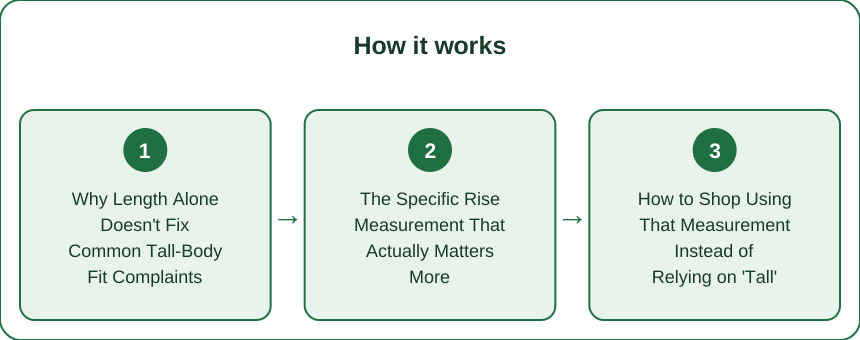
What Nobody Tells You About “Tall” Labels
They’re not standardized. One brand’s tall adds 1.5 inches to the inseam. Another adds 3.5. A third just uses a longer fit model and calls it a day.
Tall rarely means long-rise. Search a product page for the word “rise.” If it isn’t there, assume the rise is the standard one and shop accordingly.
Long torso and tall are separate problems. Plenty of 5’5” women have long torsos and need the same rise a 6-foot woman does. Plenty of tall women have long legs and a standard torso. The label can’t tell them apart — the measurement can.
Petite ranges sometimes solve tall problems. If you’re tall with a short torso, a petite-rise legging in a long inseam is the actual answer, and no size chart will ever suggest it to you.
Squat depth exposes rise, not fabric. People blame “cheap fabric” when the waistband slides during squats. Nine times out of ten the fabric is fine and the rise is two inches short.
How Should You Shop With Your Rise Number?
Treat it exactly like shoe size — a number you check, not a guess you make.
- Filter for brands that publish rise. A brand listing “front rise 12.5 in” is giving you something a size label never can. Reward that.
- Compare against your number, not the size name. If your measured rise is 12 inches, a listed 12–13 is your zone regardless of whether the label says regular, tall, or long.
- Read “high waist” carefully. High-waist is a style descriptor tied to the fit model’s body. On a long torso, a high waist yoga pant with a standard rise lands at the mid-torso, which is a normal rise with extra branding.
- Treat “tall” as a prompt to check, not a promise. It’s a good starting shelf. It is not a fit guarantee.
- Buy two of anything that works. When you find a rise that matches, the hard part is over.
One practical note: the same logic applies to shorts and bike shorts. A squat-proof high waist legging and an 8-inch short from the same line often share a rise spec, so a number that works in one usually carries over.
FAQ
Is rise or inseam more important for tall women?
Whichever one is causing your specific complaint. Hem hitting mid-calf is an inseam problem. Waistband gapping, rolling, or sliding is a rise problem — and rise is the one tall sizing usually ignores.
What rise measurement should a tall woman look for?
Most long-torso frames need a front rise of 12–13.5 inches for a true high-rise fit, versus a standard 10–11. But measure your own reference pair rather than using an average — torso length varies far more than height does.
Can I fix a too-short rise with a smaller size?
No. Sizing down tightens the circumference and shortens the rise further, which makes the waistband dig in as well as slip. Rise is a length dimension; it needs a longer garment, not a tighter one.
TL;DR:
- Rise = crotch seam to waistband; inseam = crotch seam to hem. They solve different problems
- “Tall” sizing usually extends inseam only, so rise complaints survive the upgrade
- Gapping, rolling, and sliding waistbands are rise symptoms, not fabric or quality problems
- Measure the front and back rise of a pair that fits and shop with those numbers
- Long-torso frames typically need 12–13.5 inches of front rise versus a standard 10–11
- Sizing down makes rise worse, not better
Stop shopping by label and start shopping by measurement. Rise is a two-minute check that solves the complaint tall sizing was never designed to address — and once you know your number, the guessing stops for good.
See It in Motion
Seen here: High Waist 8” Yoga Shorts — shop similar styles on bubblelime.com
Keep Reading
This article is for general informational and styling purposes only. Fit, sizing, and product availability may vary — check current details before purchasing.