Why Standard Inseam Charts Stop Being Reliable Once Height Passes a Certain Point
A standard height-to-inseam chart can predict pant length fairly reliably for most of the height range it covers, and that same chart tends to become noticeably less accurate once height passes a certain point, which reads as a labeling problem — but it’s really a data problem, since the chart was built from proportions clustered around an entirely different range.

Why Charts Are Built From Average Proportions Near the Median
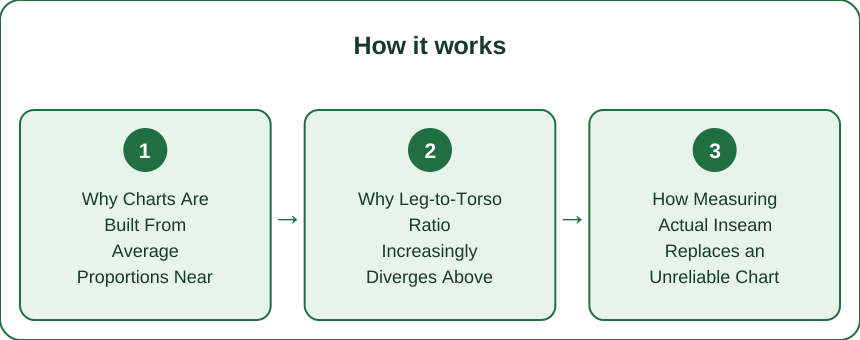
The origin: standard-inseam-charts-are-built-from-average-height-to-leg-length-proportion-data-that-clusters-heavily-around-median-heights-in-the-general-population (standard inseam charts being built from average height-to-leg-length proportion data that clusters heavily around median heights within the general population being measured, per the activewear-tall-women logic — standard-inseam-charts-being-built-from-average-height-to-leg-length-proportion-data-that-clusters-heavily-around-median-heights-within-the-general-population-being-measured), and the reframe (a chart’s accuracy being tied to how close a given height sits to that median, not a universal formula)).

Why Leg-to-Torso Ratio Increasingly Diverges Above That Range
The divergence: leg-to-torso-ratio-increasingly-diverges-from-the-charted-average-the-further-height-moves-past-the-median-range-the-chart-was-actually-built-from (leg-to-torso ratio increasingly diverging from the charted average the further an individual’s height moves past the median range the chart was actually built from in the first place, meaning the predicted inseam drifts further from reality the taller someone is, per the inseam-guide-tall-women logic — leg-to-torso-ratio-increasingly-diverging-from-the-charted-average-the-further-an-individuals-height-moves-past-the-median-range-the-chart-was-built-from-meaning-the-predicted-inseam-drifts-further-from-reality), and the frame (the chart’s error growing predictably with distance from its own data range)).
How Measuring Actual Inseam Replaces an Unreliable Chart
The fix: measure-actual-inseam-directly-with-a-tape-from-crotch-to-ankle-and-use-that-number-instead-of-a-height-based-chart-prediction-once-height-sits-well-outside-the-charts-core-range (measuring actual inseam directly with a tape measure from crotch to ankle, and using that specific number instead of a height-based chart prediction, once height sits well outside the chart’s core, reliable data range, per the long-torso-activewear-fixes logic — measuring-actual-inseam-directly-with-a-tape-measure-from-crotch-to-ankle-and-using-that-specific-number-instead-of-a-height-based-chart-prediction-once-height-sits-well-outside-the-charts-core-reliable-range), and the frame (a direct measurement replacing a prediction once the prediction’s own data no longer applies).
Standard inseam charts are built from average height-to-leg-length data that clusters heavily around median heights, so leg-to-torso ratio increasingly diverges from that average the further height moves past the range the chart was actually built from. Measuring actual inseam directly with a tape from crotch to ankle, rather than relying on a height-based chart prediction, replaces a prediction with a direct number once height sits well outside the range that chart was ever built to cover.
Keep Reading
This article is for general informational and styling purposes only. Fit, sizing, and product availability may vary — check current details before purchasing.