Why Standard Inseams Never Quite Fit Tall Women (Even in 'Long' Sizing)
Quick Answer: Standard ‘tall’ or ‘long’ sizing usually adds extra length primarily through the leg, without proportionally lengthening the rise and torso portion of the garment — this is why pants can still hit at the wrong spot on tall women even after switching to extended sizing.
You’ve specifically sought out tall or long sizing, and the pants still don’t sit quite right at the waist and hip before the extra leg length even comes into play. This is an extremely common gap in how ‘tall’ sizing is actually constructed across most mainstream brands.

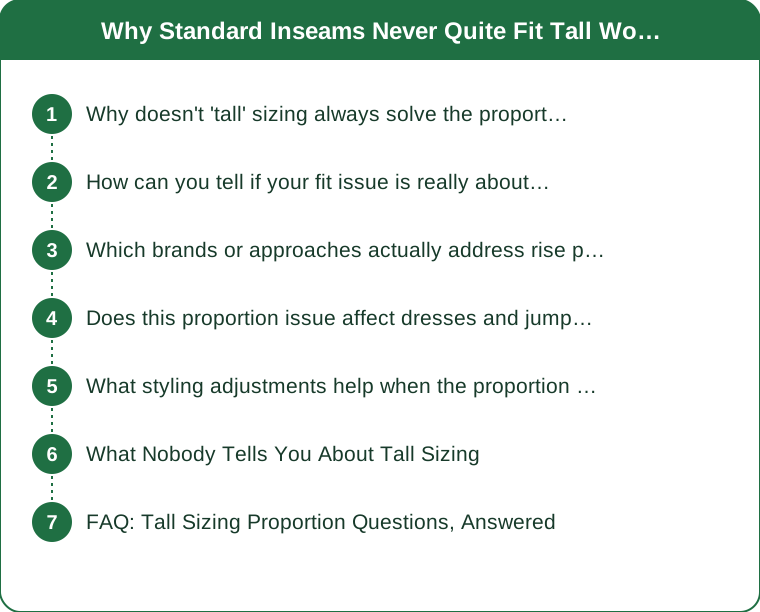
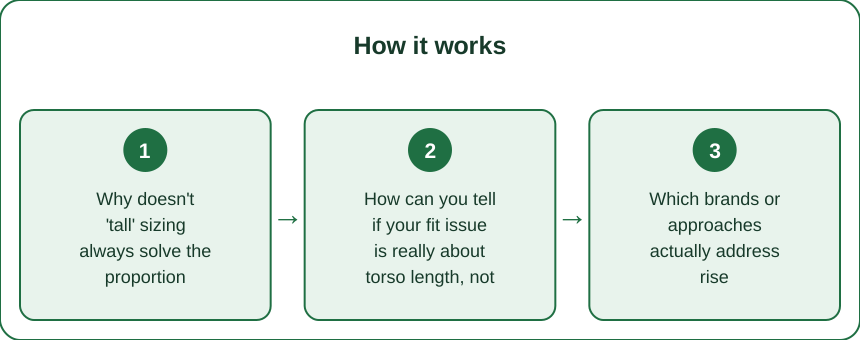
Why doesn’t ‘tall’ sizing always solve the proportion problem?
Most brands’ tall or long sizing is built by simply adding length to the leg portion of a pattern, without proportionally adjusting the rise (the distance from waistband to crotch seam) to match a genuinely taller torso. For women whose height comes partly from a longer torso, not just longer legs, this means the waistband can still sit lower or higher than intended, even once leg length is correctly accounted for.
This is a pattern-grading shortcut, not a deliberate design choice — it’s simply cheaper and simpler for a brand to extend one dimension than to re-grade an entire proportional pattern for taller bodies.
How can you tell if your fit issue is really about torso length, not leg length?
If pants in tall or long sizing still ride lower or higher at the waist than intended, or if a properly ankle-length tall inseam still leaves the crotch seam sitting slightly wrong, torso-to-rise proportion (not leg length) is likely the actual mismatch. Comparing your own torso length (waist to floor when seated, roughly) against a specific brand’s stated rise measurement is a more reliable diagnostic than relying on the ‘tall’ label alone.
Which brands or approaches actually address rise proportionally, not just leg length?
Brands that publish specific rise measurements for their tall or long sizing (rather than only listing inseam length) are more likely to have proportionally adjusted the pattern rather than just extended the leg. Custom or made-to-measure options, while pricier, sidestep this issue entirely by building a garment to your actual torso and leg proportions rather than a standard size-chart assumption.

Does this proportion issue affect dresses and jumpsuits the same way pants does?
Yes, often more noticeably — a jumpsuit or dress with a fixed waist seam position reveals torso-length mismatches even more clearly than pants, since a waist seam sitting too high or too low is highly visible in a way a slightly-off pants rise sometimes isn’t. This is why many tall women report more consistent fit success with separates than with one-piece garments that have a fixed internal seam.
What styling adjustments help when the proportion still isn’t quite right?
Choosing high-rise styles specifically (rather than mid or low rise) gives slightly more margin for a proportion mismatch to still look intentional, since a high waistband sitting an inch off from ideal is far less visually obvious than a low-rise waistband doing the same. A well-placed belt can also visually re-establish where the natural waist should read, compensating for a garment’s rise sitting slightly off from a proportionally ideal fit.
What Nobody Tells You About Tall Sizing
Most tall-specific marketing focuses entirely on inseam length, since that’s the easiest, most quantifiable dimension to communicate and the most commonly cited pain point — but for many tall women, rise and torso proportion are actually the more persistent fitting frustration, and it gets far less attention in sizing guides and marketing copy. Knowing to check rise measurement specifically, not just inseam, changes what you’re actually shopping for.
FAQ: Tall Sizing Proportion Questions, Answered
Is it worth having pants professionally altered for rise, not just length?
Yes, for a favorite pair worth keeping — rise alterations are more involved than a simple hem, but a tailor experienced with pants construction can often adjust this, particularly on higher-quality garments with enough seam allowance.
Do petite-cut brands ever accidentally work better in the torso for tall women?
Occasionally, yes — if a tall woman has a shorter torso relative to leg length specifically, a petite brand’s shorter rise (paired with self-hemming for leg length) can sometimes fit better than a standard tall cut built for average torso proportions.
How can you measure your own rise needs before shopping?
Measuring from your natural waistline down through your legs while seated (roughly approximating rise) and comparing it against a specific garment’s published rise measurement is a more reliable predictor of fit than size label alone.
TL;DR:
- ‘Tall’ sizing usually extends leg length only, without proportionally adjusting the rise
- Check a brand’s specific rise measurement, not just inseam length, before assuming fit
- Jumpsuits and dresses reveal torso-proportion mismatches more visibly than separates do
- High-rise styles and a well-placed belt help disguise a slightly imperfect proportion fit
If ‘tall’ sizing still doesn’t sit right, the leg length probably isn’t the problem anymore — the rise is, and it’s worth checking that measurement specifically before writing off another brand.
Keep Reading
This article is for general informational and styling purposes only. Fit, sizing, and product availability may vary — check current details before purchasing.