Why the Same Tall Size Fits Differently in Autumn Fabrics
Quick Answer: Summer clothing leans heavily on knit and stretch fabrics, which accommodate a longer body by stretching rather than by being longer. Autumn clothing is dominated by wovens, linings and heavier weights, none of which stretch - so the same nominal tall size reveals length shortfalls that summer fabrics were quietly absorbing. Expect autumn pieces to need a genuinely longer size, and check rise, sleeve and body length on wovens even in a brand whose summer tall sizing fits you perfectly.
You wear the same tall size in the same brand all year.
The wool trousers arrived and the rise was wrong, the crotch sat low and the hem was short - in the exact size that fit perfectly in linen in June.
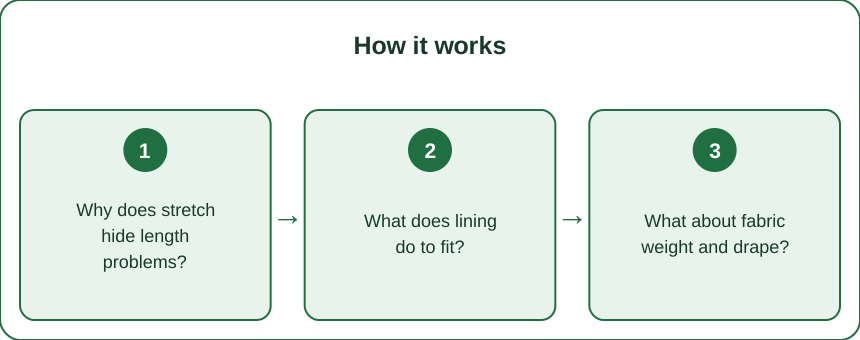
Why does stretch hide length problems?
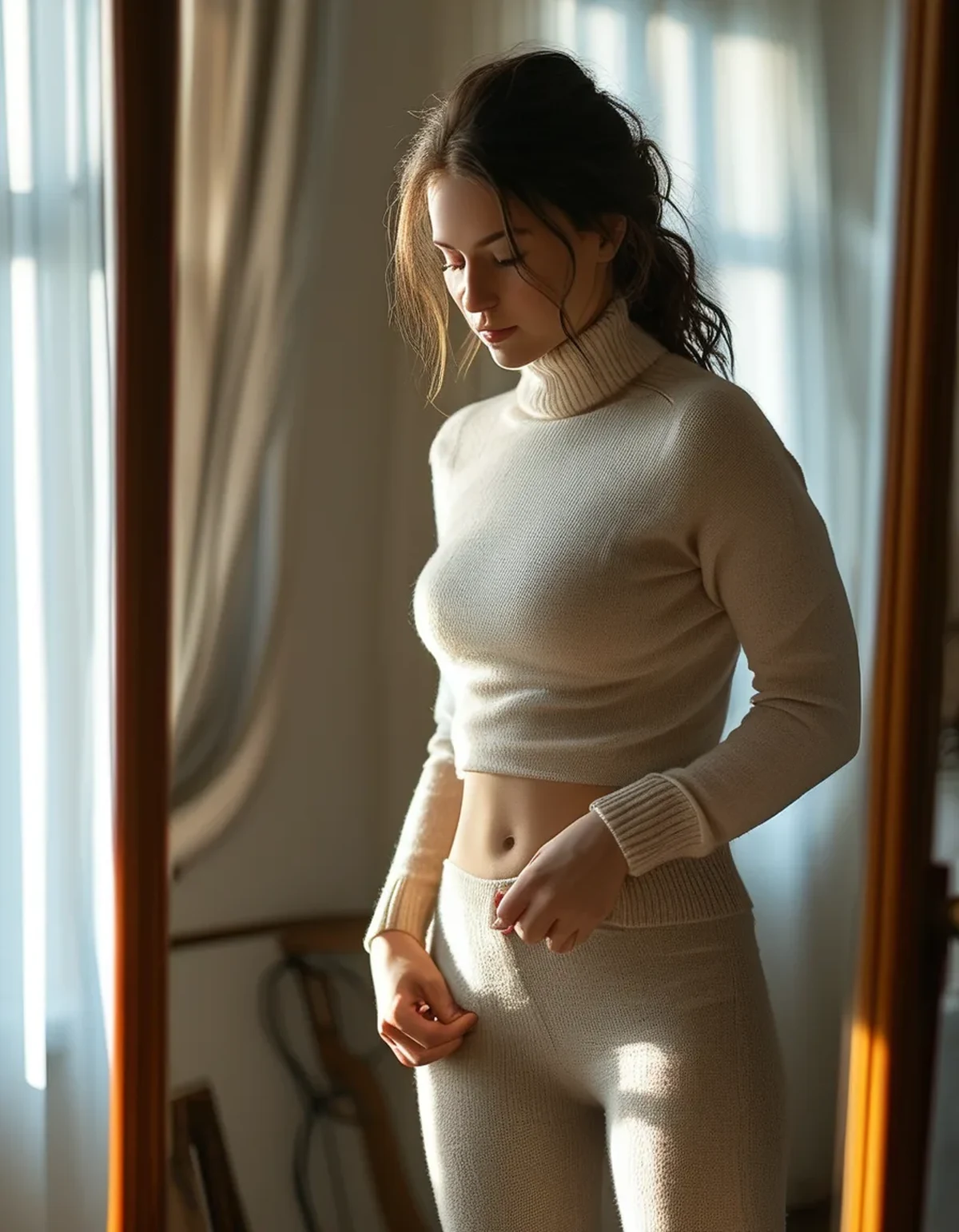
Because a stretch knit accommodates a longer body by elongating, so a garment that is technically two centimetres short simply stretches to fit and feels correct.
The trade is that it distributes tension across the garment, which is invisible in a legging or a jersey top and very visible in a woven.
Summer wardrobes are dominated by knits - jersey tops, jersey dresses, stretch cotton trousers - which is why summer tall sizing feels more forgiving.
Autumn brings wovens: wool trousers, tailored jackets, shirts, structured skirts, all of which have essentially no give in the length direction.
A woven garment is exactly as long as it is, which means every length shortfall becomes visible at once.
Which is why the same size number behaves differently by season, without anything changing at the retailer’s end.
What does lining do to fit?
Lining is a separate garment inside the outer one, and it is frequently cut shorter or with less ease than the shell.
A lining that is short in the body restricts the whole garment, which shows up as pulling across the back or a jacket that will not sit down properly.
Lined sleeves feel shorter than unlined ones at the same measurement, because the lining reduces the sleeve’s ability to shift on the arm.
Lined trousers restrict the rise, which is the most common tall complaint in autumn tailoring and is almost always a lining issue rather than a shell issue.
Check by reaching and sitting, not by standing, since lining restriction shows only under movement.
And note that lining is rarely adjustable cheaply, which makes it a buy-or-do-not-buy factor rather than an alteration project.
What about fabric weight and drape?
Heavier fabric hangs differently, which changes where a hem visually sits even at the same measured length.
A heavy wool trouser hangs straighter and reads shorter than a light summer trouser of identical length, because it does not break over the shoe in the same way.
Structured fabrics hold their shape rather than following the body, so a jacket that is slightly short in the body stands away rather than draping over.
Heavier knits add bulk at every layer intersection, which affects how sleeves and hems relate to what is under them.
Which means the correct autumn length is often slightly longer than the correct summer length for the same visual result.
And this is a real reason to try rather than reorder, even from a brand you know well.
How should I adjust my ordering strategy?
Order autumn wovens one length increment longer than your summer knit size where the option exists, and return if wrong.
Check rise measurement rather than inseam for trousers, since rise is the tall constraint in tailoring and is far more often the failure point than leg length.
Check the sleeve measurement in the product details rather than relying on the tall label, since tall sleeve length varies substantially between brands and between garment types.
Order two sizes when the returns policy allows, which is the standard approach and is more necessary in autumn than in summer.
Prioritise trying on in person for tailoring specifically, which is the category where fit failures cost most.
And keep a note of what actually fitted, by brand and by garment type, since the useful information is specific rather than general.
Myth vs Fact: Tall Sizing and Fabric
Myth: a tall size is a tall size across a brand.
Fact: tall grading varies by garment type within the same brand. A tall trouser and a tall jacket from the same label often use different added lengths, which is why one fits and one does not.
Myth: if the summer version fits, the autumn version will.
Fact: summer knits stretch to accommodate; autumn wovens do not. The same nominal size can be functionally shorter in a woven by a noticeable amount.
Myth: length problems are always about the hem.
Fact: in autumn tailoring the rise and the body length are more commonly the problem, and both are far less alterable than a hem. Check those first.
Myth: you can alter your way out of anything.
Fact: hems are easy, sleeves are sometimes possible, shoulders and rise essentially are not. Buy for the unalterable dimensions and adjust the rest.
Myth: heavier fabric means you should size up.
Fact: size up adds width, which is rarely the issue. Length is what heavier fabric exposes, so a longer size rather than a wider one is the correct response.
FAQ: Tall Autumn Fit Questions, Answered
Why do wool trousers fit differently from summer trousers in the same size?
Woven wool does not stretch in the length direction, so a shortfall that a stretch cotton absorbed becomes visible. Rise is usually the first thing to fail.
What measurement should I check for trousers?
Rise, before inseam. On a long torso the rise is the constraint that determines comfort, and it is the measurement product pages most often omit.
Can lining be lengthened?
Rarely worth doing. A short lining is effectively a fixed limit on the garment, which makes it a reason not to buy rather than an alteration project.
Should I order a longer size for autumn even in a brand that fits?
Where the option exists and returns are free, ordering both is sensible. Grading varies by garment type, so a known brand is not a guarantee across categories.
Which alterations are worth paying for?
Hems, and sometimes sleeves if there is fabric in the cuff. Shoulders and rise are not economically alterable, so buy for those.
Why do jackets feel shorter than the measurement suggests?
Structured fabric stands away from the body rather than draping, and lining restricts movement. Both make a jacket read shorter than the same measurement in an unlined summer version.
How do I keep track of what fits?
A short note by brand and garment type - trouser rise, sleeve length, body length - is far more useful than remembering a size. Tall sizing is too inconsistent to hold in your head.
TL;DR:
- Summer knits stretch to absorb length shortfalls; autumn wovens do not, so the same size fits shorter.
- Lining is a second garment inside the first and is often the real constraint, particularly in the rise.
- Heavier fabric hangs straighter and reads shorter than a lighter fabric at identical length.
- Check rise before inseam - it is the tall constraint in tailoring and the least alterable.
- Tall grading varies by garment type within a brand; a known label is not a guarantee.
The size did not change - the fabric stopped covering for it.
Keep Reading
This article is for general informational and styling purposes only. Fit, sizing, and product availability may vary — check current details before purchasing.