Why Tall Sizes Fit Your Legs but Fail Your Shoulders
Quick Answer: When a brand grades a regular pattern into a tall one, the standard recipe adds length — an inch or two at the inseam, sleeve, and hem — and changes little or nothing about shoulder width, armhole depth, or back width. But taller bodies are not just longer: frames scale too. The result is the signature tall-size fit: hems finally right, shoulders tight, armholes cutting, back pulling on every reach. Length is also the easiest thing to alter, and frame is the hardest — so tall sizing solves the cheap problem and skips the expensive one.
Here is what brands actually change, how to diagnose which failure you are holding, and how to shop around it.
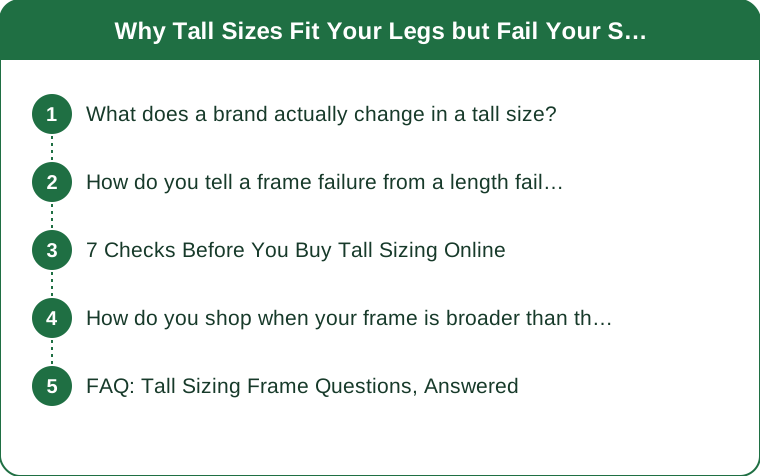
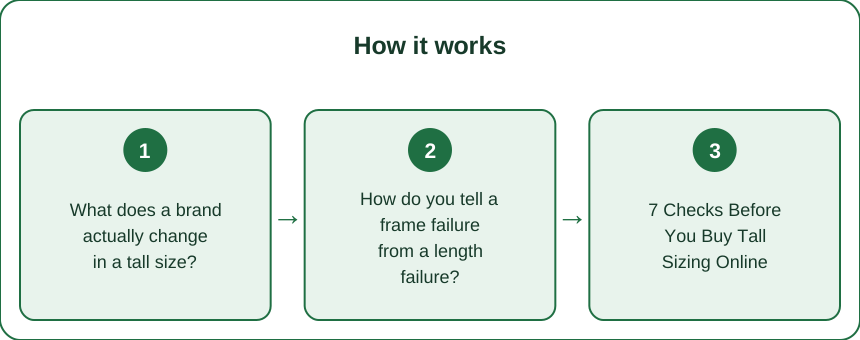
What does a brand actually change in a tall size?
Less than the label implies — and knowing the recipe explains every fit you have ever returned.
Standard tall grading adds one to two inches of inseam and sleeve, up to an inch of body length, and stops. The shoulder seam, armhole depth, bust-waist-hip circumferences, and back width are usually carried over from the regular block unchanged. It is a length edit, not a redraft.
Why brands do it: a true tall block — redrafted with scaled shoulder width, deeper armholes, longer rise — is a second pattern with its own fit-model testing and inventory risk. Length-only grading reuses everything and captures most of the market that just wants pants to reach their ankles. It is rational economics that quietly defines what tall means at most retailers.
But height does not arrive as pure length. Taller bodies tend toward broader shoulder spans, longer torsos, wider backs, and bigger armhole requirements — not uniformly, but commonly. A five-foot-eleven frame wearing a shoulder drafted for five-five is wearing the wrong garment in the dimension that shows most.
Which is why the failure pattern is so consistent: tall jeans and tall leggings succeed constantly — legs really are mostly a length problem, and a 33-inch inseam legging genuinely fixes what a regular one cannot. Tall blazers, button-ups, and fitted jackets disappoint constantly — because those garments live or die at the shoulder, the one place the tall edit never touched.
How do you tell a frame failure from a length failure?
One diagnostic move, and a map of symptoms to causes.
The reach-forward test settles it. Put the garment on and reach both arms straight forward, as if pushing a door. If the garment binds across the upper back, pulls at the armhole, or the sleeves drag the shoulders backward — that is frame: the back width and armhole are too small. If everything moves freely but wrists and ankles are exposed, that is length. Length failures are fixed by tall sizes; frame failures are not.
Symptom map for the fitting room:
Shoulder seam sitting inboard of your shoulder point — frame. The garment is narrower than you. No length will fix it.
Armhole cutting into the front of your underarm — frame. The armhole depth was drafted for a smaller frame; it will not stretch into comfort.
Sleeves that twist or drag when you move — usually frame pretending to be length: the sleeve is rotating around a shoulder that sits in the wrong place.
Waistband of pants dipping or gapping — often rise, which tall grading sometimes lengthens and sometimes forgets; check the brand’s rise number against a pair that fits.
Hem and cuff shortfall with everything else comfortable — pure length, the one problem tall sizing reliably solves.
The priority rule follows directly: buy for the frame, alter for the length. A tailor can lengthen nothing but can hem anything; shoulders, armholes, and back width are effectively permanent. A garment that fits your shoulders with a slightly wrong hem is a purchase; the reverse is a return.

7 Checks Before You Buy Tall Sizing Online
1. Hunt the size chart for a shoulder or back measurement. Most tall charts list only inseam and sleeve — which tells you the brand edited only those. A published shoulder width is a strong signal of a true tall block.
2. Find the model’s height and size, then read the sleeve. If the on-model sleeve already looks marginal on someone five-ten, it has no chance on longer arms. Model stats are the most honest fit data on the page.
3. Read the fabric content before the reviews. Four-way stretch and knits forgive a carried-over shoulder; rigid wovens do not. The stretch percentage predicts whether the frame problem is survivable.
4. Search reviews for the words shoulders, armhole, and across the back. Tall buyers write the frame complaints in exactly those words. Their returns are your filter.
5. Check whether tall is a separate block or a checkbox. Brands that photograph tall sizes on tall models and publish separate charts usually drafted separately. A tall checkbox on the regular product page usually means length-only grading.
6. Confirm the return window before the cart. Frame fit cannot be judged from a flat lay; the reach test happens at home. Free returns are not a perk for tall shoppers — they are the fitting room.
7. Measure your best-fitting garment flat and compare. Shoulder seam to shoulder seam on the jacket that fits, laid flat, is a number no size chart can mislead. Two minutes with a tape converts every future chart from marketing into data.
How do you shop when your frame is broader than the tall block?
Choose categories that bend, details that add room, and the two-number habit.
Let knits carry the frame problem. Sweaters, ponte blazers, jersey dresses, and stretch-woven shirting absorb an inch of shoulder shortfall invisibly. The tall edit works far better in stretch categories — which is why tall activewear succeeds where tall tailoring fails: full-length yoga pants and 31-inch-plus inseam leggings only ever needed the length fix, and four-way stretch handles whatever frame variation remains.
In wovens, hunt the details that build in room: raglan sleeves — no shoulder seam to sit wrong; dropped shoulders and dolman cuts — deliberate surplus; back pleats and action backs on shirts — engineered reach; oversized-on-purpose styles sized down one rather than fitted styles sized up two, which distorts everywhere else.
Use menswear and unisex strategically for outer layers. Men’s blocks carry wider shoulders and deeper armholes as standard; an overshirt, chore coat, or crewneck from that side of the store often fits a broad tall frame better than the women’s tall equivalent — at the cost of waist shaping, which layering does not need anyway.
Adopt the two-number habit permanently: your inseam and your shoulder width. Every tall shopper knows the first; almost nobody carries the second, and the second is the one that predicts the returns. Together they sort any product page in thirty seconds: length number present and sufficient, stretch or shoulder room confirmed, buy; otherwise skip.
And spend the tall-tailoring budget where true blocks exist. A handful of brands genuinely redraft for tall frames; they cost more and earn it precisely in the shoulder. One true-block blazer outlives four length-edited ones that never quite closed across the back.
FAQ: Tall Sizing Frame Questions, Answered
Why do tall leggings fit me perfectly when tall blazers never do?
Because leggings only ever had a length problem — stretch fabric handles the frame automatically, so adding inseam genuinely completes the fit. Blazers live at the shoulder and armhole, the dimensions length-only tall grading leaves untouched.
Should I size up when the shoulders are tight?
Sizing up adds shoulder room plus circumference everywhere you did not ask for it. It works in knits and casual cuts, and fails in tailoring, where the garment then fits nowhere. In structured pieces, change brands rather than sizes — the shoulder is the one seam worth shopping for.
Is there any alteration for a tight shoulder or armhole?
Meaningfully, no. Letting out a shoulder seam yields half an inch at best, and armholes can be lowered slightly at real cost. Tailoring runs downhill: take in, shorten, hem. Frame room must be bought, not built.
Which categories are safest to buy tall online?
In rough order: leggings and activewear, jeans and trousers, knitwear, casual dresses in stretch fabrics — then, far behind, structured jackets and rigid button-ups. The more a garment depends on the shoulder, the more it needs a true tall block or an in-person reach test.
TL;DR:
- Most tall sizing adds sleeve and inseam length to a regular pattern and leaves shoulder width, armhole depth, and back width untouched — solving legs and abandoning frames.
- The reach-forward test separates the failures: binding across the back is frame, exposed wrists and ankles are length; buy for frame, alter for length.
- Online, hunt for shoulder measurements, model stats, stretch content, and reviews mentioning shoulders — and measure your best-fitting garment flat once.
- Knits, raglans, action backs, menswear outer layers, and true tall blocks carry broad tall frames; length-edited tailoring never will.
Measure the shoulder seam of the jacket that fits you tonight and write the number in your phone. It will save you more returns than your inseam ever has.
See It in Motion
Seen here: High Waist Embossed Yoga Leggings with Side Pockets — shop it on bubblelime.com
Keep Reading
This article is for general informational and styling purposes only. Fit, sizing, and product availability may vary — check current details before purchasing.