Why the Same Tall Trousers Fit Differently Once You Change Shoes
Quick Answer: Trouser length is measured to the floor, so heel height is part of the fit specification, not an accessory choice. Changing from a flat to a 6cm heel effectively shortens the trouser by 6cm — and on a wide leg, where the correct hem sits within a two-centimetre window, that turns a well-fitting trouser into one that reads too short. Tall shoppers hit this harder because tall sizing already leaves them with the shortest acceptable version.
The trousers you love with boots look wrong with trainers, and you assumed you had imagined it.
You had not. You changed the specification.
Why does a couple of centimetres matter so much?
Because the acceptable hem window is much narrower than people realise, and it varies by cut.
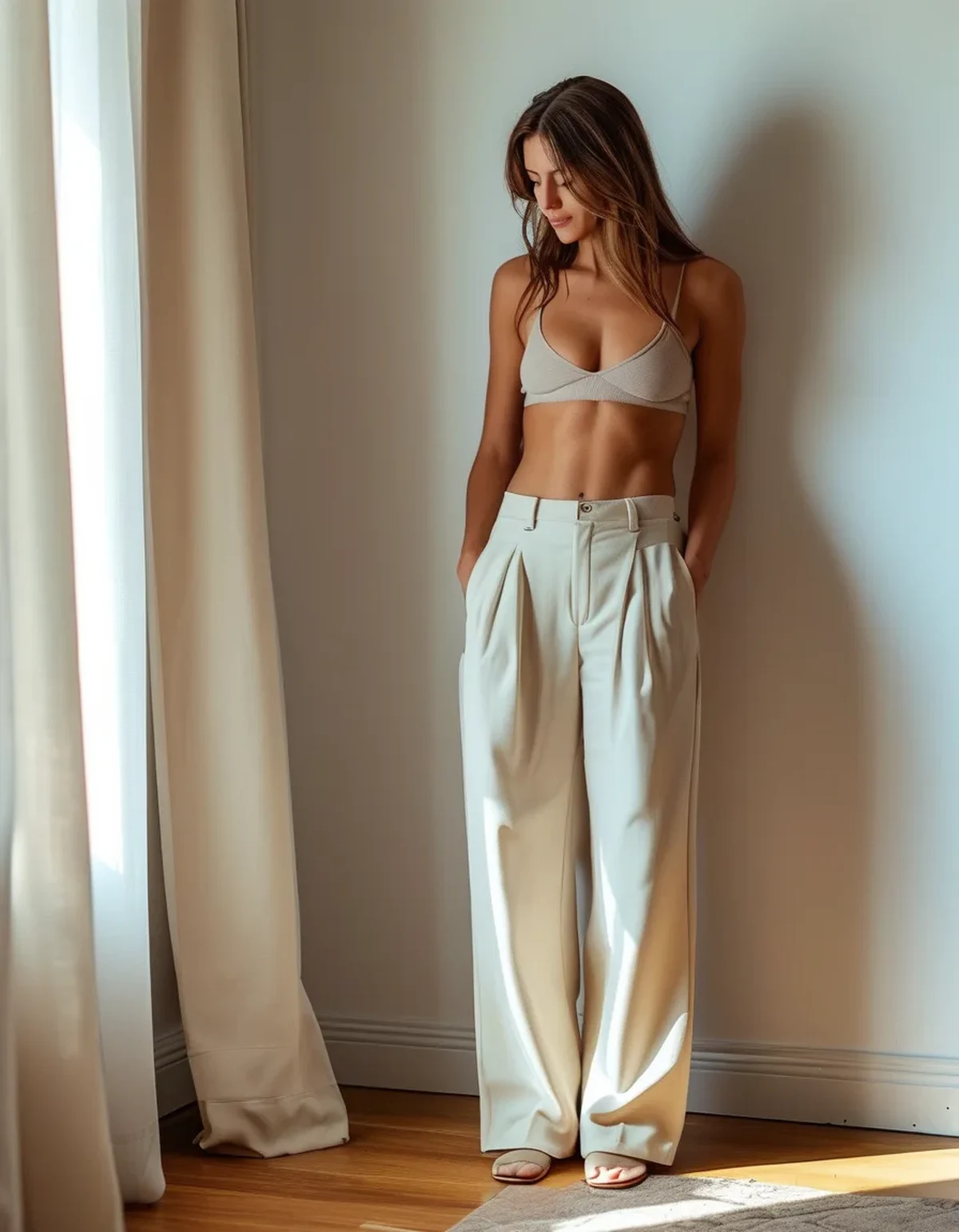
A wide leg wants to almost touch the floor — roughly 1-2cm of clearance at the back, breaking just slightly or not at all at the front. The window is genuinely about two centimetres wide. Above it, the trouser reads as too short and the whole outfit looks slightly unfinished. Below it, the hem drags and wears.
A straight leg is more forgiving, with perhaps a four-centimetre window, because a visible break at the shoe is acceptable in a way it is not on a wide leg.
A tapered or cropped leg is more forgiving still, because the hem is deliberately away from the shoe and the eye is not looking for a relationship between them.
So heel height matters in inverse proportion to how forgiving the cut is — which is unfortunate, because wide legs are one of the most useful cuts for tall frames and the least tolerant of a shoe change.
The tall-specific twist is the starting point. Most tall sizing is drafted to the minimum length that qualifies as tall, not a generous one, so tall trousers frequently arrive at the short end of the acceptable window with flat shoes. Add a heel and you are out of it immediately, whereas someone wearing a regular length with a couple of inches of spare hem has room to move.
How do you actually manage this?
By deciding the shoe before the hem, which is the reverse of how most people shop.
Hem to the shoe you will actually wear most. Not the shoe you own most of, and not the one you tried them on with in the shop. If a pair of trousers is your work trousers and you wear the same two pairs of shoes to work, hem to those.
Buy long and alter. For anyone tall this is the only reliable strategy, and it is worth reframing hemming as part of the purchase rather than a failure of the garment. An extra-long trouser hemmed to your shoe is a better outcome than a tall trouser that happens to be nearly right.
Consider a second hem for the same trousers. For a much-worn pair, having a flat-shoe pair and a heel pair is not extravagant — it is two garments for the price of one plus two alterations, and it is exactly what people with limited tall options end up doing.
Or choose cuts that ignore the question. Cropped, ankle-length and tapered trousers are indifferent to heel height, which is a large part of why they have become a tall wardrobe staple. The trade-off is that they are less formal.
Check the hem allowance before buying. Turn the trouser inside out. Three or four centimetres of folded allowance means it can be lengthened later; a narrow overlocked hem means it cannot. For tall shoppers this is worth checking every time, because the ability to let down is worth more than a slightly better initial fit.
And note the boot problem specifically. Boots add height at the heel and bulk at the ankle, so a trouser hemmed for boots is both shorter and needs more width at the hem. A wide leg handles this well and a straight leg often does not, which is the source of most autumn hem complaints.

What Nobody Tells You About Tall Trouser Lengths
Tall inseams are not standardised between brands, and often not within a brand. One retailer’s tall is another’s regular. This is not carelessness; it is that each brand grades from its own base and applies its own tall increment, commonly anywhere from 5 to 9cm.
The rise changes the effective length. A higher rise sits the waistband further up your torso, which means the same inseam produces a longer trouser. Two pairs with an identical stated inseam can differ by several centimetres in where the hem lands, purely because of the rise. This is the reason inseam charts are so unreliable and why an outseam measurement is far more useful.
Fabric weight changes the hang. A heavier fabric hangs straighter and hits lower; a light drapey fabric moves and effectively sits a touch higher. The same trouser in linen and in wool will not read the same length, which is why summer trousers often look right and their autumn equivalents look short.
Washing changes it, once. Most cotton and cotton-blend trousers lose a small amount of length in the first few washes and then stabilise. Hemming before the first wash is a classic error, particularly with denim, where the shrinkage can be a full centimetre or more.
Heel height and hem length interact with your posture too. A heel tilts the pelvis slightly and changes how you stand, which alters where the waistband sits and therefore where the hem falls. This is a small effect and it is not zero.
And the seasonal one worth planning for: thicker socks. Boot socks in November add a small amount of height and considerable ankle bulk. Trousers hemmed in August over bare feet will read differently in December, which is worth a moment’s thought when you are hemming in late summer.
What should you do differently going into autumn?
This is the season where the whole thing changes at once, which is why it is worth being deliberate.
The shoe rotation changes completely in a fortnight. Sandals and flat trainers give way to boots and heeled ankle boots, and every trouser in the wardrobe changes its effective length simultaneously. Trying trousers on with the autumn shoes before you need them is a twenty-minute job that prevents a month of small irritations.
Get hemming done in late summer, not in October. Alteration shops are busiest in autumn, and the trousers you want hemmed are the ones you want to wear now.
Buy tall outerwear and tall trousers early. Tall sizing sells through first every year without exception, and the deepest stock is available before the season starts rather than during it.
Reassess the crops. A cropped trouser that worked with bare ankles in August needs a considered sock or boot in October, and the ones that do not work with either are effectively out of the wardrobe until spring. Knowing which is which now prevents the standing-in-front-of-the-wardrobe problem later.
And check the hem wear. Trousers hemmed for boots and worn all winter get scuffed at the back hem. A small amount of hem tape, or having them shortened by half a centimetre at the end of the season, is what keeps a good pair going for years — and for tall shoppers, keeping a good pair going matters more than it does for people who can replace them easily.
FAQ: Tall Trousers and Hem Length, Answered
What measurement should I actually give a tailor?
Wear the shoes. Stand normally, let the tailor pin it, and check it in a full-length mirror before they finish. Numbers on their own are unreliable because of the rise and posture effects. If you must specify remotely, an outseam measured from your own waistband position to the floor, in the relevant shoes, is far more useful than an inseam.
Is it worth buying trousers designed for a specific heel height?
Some brands do label them this way, and it is genuinely helpful when the labelling is honest. Treat it as a starting point rather than a promise — combined with the rise and fabric variations, it still needs checking in person.
How much length can a tailor add?
Only what is in the hem allowance, which is usually 3-5cm on quality trousers and often under 2cm on fast fashion. There are ways to add a facing or a contrast band, which can look deliberate on casual trousers and rarely looks right on tailoring. For tall shoppers, checking the allowance before buying is the single highest-value thirty seconds in a fitting room.
TL;DR:
- Hem length is measured to the floor, so heel height is part of the specification — a 6cm heel shortens the trouser by 6cm.
- Wide legs have a hem window of about two centimetres; straight legs about four; cropped and tapered cuts are indifferent.
- Tall sizing usually arrives at the short end of that window already, which is why tall shoppers feel a shoe change immediately.
- Buy long and hem to the shoe you actually wear, check the hem allowance before buying, and never hem denim before the first wash.
- Do the autumn shoe swap and any hemming in late summer, and buy tall stock before the season rather than during it.
The underlying point is that trousers do not have a length — they have a length in a particular pair of shoes. Once you shop that way, the mysterious business of a favourite pair suddenly looking wrong stops being mysterious, and starts being something you can plan around.
See It in Motion
Seen here: High Waist Wide Leg Yoga Pants with Pockets — shop it on bubblelime.com
Keep Reading
This article is for general informational and styling purposes only. Fit, sizing, and product availability may vary — check current details before purchasing.